I really enjoyed your spontaneous presentations of examples of annotation–for scholars, for students, for laypeople–from the wilds of the web. Here is a messy list of what you came up with:
(Apologies for not putting this up earlier, I sort of confabulated the blog post attached to the audiobook project with what seems to be called Blog Post #3.)
As a major proponent of Barthes, I was excited to read From Work to Text, which is in fact a piece of his I’ve never read. While I’ve never been a particularly large fan of annotation, the current work in this course has caused my mind to fixation on the subject lately, which had a degree of effect on my reading. Early on, Barthes lists “method, genres, signs, plurality, filiation, reading and pleasure” as a set of propositions, and establishes that these are propositions meant to be “to be understood more in a grammatical than in a logical sense.” That is, rather than proposals to be supported or refuted, his propositions serve the purpose of existing primarily to support themselves – “[remaining] metaphorical.” I think these propositions, while not created with annotation necessarily in mind, can be used to examine annotation and annotations just as they are used to examine the “work” and the “text.”
I want to focus primarily on the propositions of “methods,” “reading,” and “pleasure.” In the case of the first of these, Barthes refers to the “text” as “a methodological field,” or something that exists only in method, or largely in an non-physical state, or, as he puts it, as something that is closer to embodying “demonstration” more than anything else. I feel like this holds a lot in common with the idea of annotation, especially the idea of virtual annotation. Annotation, at least in my own mind, is something very much grounded in method and non-physicality – however, one could very much argue that the result of the process of annotation, the annotations themselves, are closer to Barthes’ idea of the “work” as opposed to the “text.”
Thinking about “reading,” the process of annotation presupposes that one has engaged in reading the piece that is being annotated. In fact, one could argue that annotation intrinsically requires reading, or at the very least, interacting with a piece in a way contextually equivalent to reading, such as watching a play or movie, viewing a painting or photograph, or playing a game. Barthes remarks that “the [t]ext requires that one try to abolish (or at the very least to diminish) the distance between writing and reading, in no way by intensifying the projection of the reader into the work but by joining them in a single signifying practice” – I think this could be seen in the relationship between annotation and annotations. When I think about Barthes’ assertion, I think about how writing requires reading, but reading doesn’t require writing – however, annotation requires both reading and writing, which produces annotations, which rely on the process of annotation.
Finally, “pleasure.” A key point Barthes makes here is that “if [one] can read [an author], [one] also [knows] that [one] cannot re-write them.” This almost lends itself too well to the parallels relating to annotation and annotations – I would argue that the closest, at least in some terms or senses, at least without delving into plagiarism or turning to fanwork, one could come to rewriting a work is through annotating that work. While it’s not truly rewriting it, it could certainly be seen as a form of self-produced augmentation or addition to the work, which is at least related to the concept of rewriting.
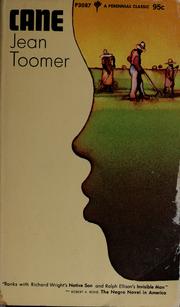
The overarching purpose of this project is to put the theories of Barthes, Bauer/Zirker, Iser, Drucker, et al. into practice by collaborating on “editions” of a text, in this case Toomer’s Cane. Obviously, it takes many hands and several years to create a publishable edition of a literary text, so we will keep our expectations modest and emphasize the process of collaboration and the experimentation with the affordances, design choices, and relationship with “implied readers” that digital publication allows.
In class, we decided by consensus to work within the following parameters:
two roughly equal groups will each create an edition: each group selected a relatively narrow “frame” for the edition. Whereas a printed “Norton Critical Edition” of a literary text, for example, aims to tell a “general reader” everything they need to know to feel oriented to the text, our editions will focus on a narrower (but more novel) issue:
group one (ADD NAMES) will create an edition focusing on popular and “folk” culture represented and reworked in the text.
group two (ADD NAMES ) will create an edition that links the text to its “reception history,” embedding quotes and links that give readers a sense of how Cane has been read, focusing on the 1920s and perhaps its revival in the 1970s in conjunction with the “Black Arts Movement” and the rise of African American Studies in the academy.
both groups began discussing next steps:
choosing a platform (some suggestions are here), creating a division of labor and workflow, and scheduling things out to ensure finishing within two weeks.
I want to emphasize that I want you to experiment and enjoy the collaboration: I am realistic about what you can do in two weeks and am perfectly happy with a partial edition that is a “proof of concept.” For example, group two might limit itself to the 1920s reception of the text, or it might add “reception history” only to the “Kabnis” section. Be realistic and follow your interests where they go.
Here is a Zotero group I hacked together to collate Cane resources. I’ve already linked to the Modernist Journals Project and a couple of scholarly works linking Cane to music; feel free to add your own. If you’re interested in joining so you can add resources and collaborate with your team on the Zotero group, let me know and I’ll add you.
instead of formal presentations like last time, we will have an informal discussion of the process/product on 10/22, though you still might want to designate a spokesperson for your group as one of the “jobs.” I do ask that, as for the first group project, each team member compose a brief post for the blog (500 words max) reflecting on a) the process/product as a whole and b) your specific role within it, with an emphasis on what the experience taught you that theorizing about annotation, marginalia, readers, and editions, or consuming such editions, didn’t.
evaluation will be very similar to last time, with a group comment/grade and an individual comment/grade. The criteria are only slightly changed:
adventurousness: does the text take risks, or just play it safe? Does the edition resemble other standard “critical editions” in print, or does it do something new, using digital affordances to engage readers in novel ways or devise a new angle on the text that will be fresh to readers?
quality: is the product accessible and user-friendly? Does it articulate a clear relationship between the “primary text” and your “secondary” comments on it? Was some attention paid to aesthetics and design?
reflectiveness: does the presentation (and the discussion in the seminar and on the blog) reflect careful thinking about the project? Did the secondary readings by Barthes, Bauer/Zirker, Iser, Drucker, et al. inform the project in any way?
Here is the version produced by the Group with No Name (their chosen name). They gave a rather decentralized approach, with each member cultivating their own garden and yielding a wide range of supplementary materials. They used the genius.com platform:
Team: Conn Mac Aogain; Martin Glick, Ostap Kin; Senom; Lola Shehu / This is a digital annotated edition of a selection from Jean Toomer’s Cane (1923). This project was produced as
And here’s the Office Gingers’ version, which used WordPress+hypothes.is and emphasized Cane’s engagement with visual art and popular music:
I had quickly read Bartleby the Scrivener many years ago during a summer vacation in high school. Although I have always enjoyed reading literature, I have to confess I read it to get a taste of Melville without having to take on Moby Dick just yet. I don’t think I appreciated Bartleby at that first reading. While I found the description of aspects of mid-19th century life in New York interesting, I thought it was an odd work, very gloomy and Dickensian (in all the worst ways). Since that time, I have had the good fortune to read Kafka’s Metamorphosis and Flannery O’Connor’s The Displaced Person, and to have read/heard/seen presentations of Samuel Beckett’s stage and radio plays. When I first got the text for this course and downloaded it as a pdf, I gave it a cursory reading. Then I tried a different approach which I have been using a lot lately with assigned readings in DH and Linguistics courses, namely using the pdf Read Aloud function. While this has been very helpful with extracting enriched understanding of complex journal articles when my attention is flagging, it was not particularly effective with Bartleby for me. The Read Aloud function is just too chopped/clipped and monotone even for a work like Bartleby.
However, when I listened to Georgette’s abridged audio edition read by Matt and produced by Martin and Lola, it was an entirely different experience. Matt’s excellent interpretations of the various characters gave shape and color to the text, while the timbre of his voice reading Bartleby’s lines provided a contrast which brought home to me the lostness and anomie of Bartleby the office drone. Furthermore, although I comprehend the concept of alienation in modernity, the timbre of Matt’s voice strongly conjured up the images of the displaced person (although O’Connor’s example was for more industrious than Bartleby) who does not fit in at his work place, and of the disability and strange otherness of Kafka’s Gregor Samsa in Metamorphosis. In particular, Matt’s audio presentation reminded me of the alienation and paralytic stasis of the characters in Beckett’s stage and radio plays.
In the early group discussions, we played with the idea of how to exploit the concept of “pandemic chic” to maximum dramatic effect. I am certainly very aware of modern adaptations of historic works, such as those of Shakespeare. However, it was not until I started developing a script to curate the abridged reading that I really saw the full potential of developing the concept of the impact of a pandemic on a socio-economically obscure person such as Bartleby. What really surprised me was how the Lawyer’s narrative could be used to illustrate aspects of white privilege and white guilt.
My major takeaways are the great potential for audiobooks to enrich the consumer’s/audience’s/reader’s experience and how prescient Melville was concerning aspects of alienation in modernity.
Lastly, in group projects I have often in the past become the group organizer. Due to a mistake with the registrar, I joined the class a week late, and was assigned a role. This was a good experience for me and I got a lot out of my assigned role.
Counterpoint is an important musical composition style which involves playing two or more melodies alongside each other in related keys, and it was especially popular in the Baroque period. While we don’t have the ability to read two texts at the same time, it is possible to listen to two texts at once. What does his kind of experience reveal? To hear two narrators speak at the same time would be nonsensical, so an experiment involving playing two audio books at once would be a miserable failure. But I argue that the sometimes caustic recording that I put together which plays the Dickens short story narrated by our Reader interspersed with sound clips from News related to current events, achieves a kind of polyphony of sounds and contrapuntal elegance.
The intent here is to force inspiration. When we read we are alone with the author. No thoughts can emerge which are not a product of the two. Once we include a third stream of ideas the ability to inspire is increased exponentially. We may interact with the sound sample in relation to a word from the spoken text, or we may instead focus our attention on the narrative of the text picking up a phrase or two of the sound samples as our attention to it wavers. Why don’t these stacked sounds simply melt into a mess of unknowability? In the same way that a viola and violin, piano and voice, or mandolin and bassoon carry explicitly different tones, the introduction of a lead aesthetic sample of Narration which runs through the recording acclimates us to its conditions. The sound samples are different enough in kind for our brain to separate the two.
The Presidential debate of September 29 was a great example of how two voices talking over each other results in a distracted miasma of sound. The case was that it was two elderly male voices. When the Narrator of Bartleby mentioned “respect” and “decency”, at that moment I played the clip of AOC berating Rep Ted Yoho for his crude comments toward her. The two audio clips play alongside each other, and I would put forth that because of significant differences in their aesthetics qualities (male vs female, close vs reverby sound, moderate vs impassioned speech) the brain is able to compartmentalize them and make sense of the two at the same time. The aesthetics of our audio project are more closely aligned with collage art, which are meant to force an inspiration out of the viewer and their relation between two or more artistic elements. Again, this is less a relationship between the reader and the author and instead places the reader (listener) in the position of a conduit or channel through which novelty is found in the juxtaposition of presented ideas.
In the below picture, the visual layout of the clips can be seen. An outline of where the clips lay is as follows: Channels 1, 2, and 4 are News Clips which play at intervals and have about 2 minutes between them. Channel 3 is a 3 minutes audio sample of an office environment which plays almost the entire duration of the recording. Channel 5 is the stitched together narration of the book.
We first came together on two important decisions that dictated the course of this project: doing something unique and unexpected, and using an abridged version of the text to focus on Bartleby the character. Matt’s idea to only read footnotes, and Martin’s “pandemic-chic” version of somehow connecting Zoom and working from home, made me think of the text differently and brought out perspectives on tensions and themes that I had not considered before.
From the beginning of this process I wanted to incorporate the intense scorching energy of the present into our audiobook. Our team discussion helped me narrow this down to a Year 2020 them, which would include an audio background to allow us to incorporate the political and social issues that speak closely to the text. The first soundbites I thought of were a compilation of Barbara Walters saying “this is 2020” and the sound of crackling fire coming in and out in the recording and intensifying into a roaring frightening sound of a huge forest fire to end the piece. We ended up using these sounds, and I think it was brilliant that Martin let the fire burn long after Matt’s reading was over.
Another part of the process that reshaped Bartleby (the story) was editing our abridged draft to find the best moments for the audio background. Not only did I develop a profound mistrust for the narrator, but I also found much more of our sweltering world’s conflicts and anxieties in the novella. I can best illustrate this with a couple moments in the text that I re-inserted into Georgette’s draft. The first was the narrator’s story about giving Turkey’s coat, especially the quote “In fact, precisely as a rash, restive horse is said to feel his oats, so Turkey felt his coat. It made him insolent. He was a man whom prosperity harmed.” I wanted to saturate this quote with Mnuchin’s voice (words) and poorly digussed disdain speaking about unemployment benefits . Another bit of text I returned to our abridged version was the moment of anticipation when the narrator returns to his office hoping to find that Bartleby is finally gone. The picture of Bartleby as a virus is complete, and he congratulates himself on removing him. This made me think of a very important 2020 relationship, Trump and Covid 19.
What I had not considered in our readings about audiobooks was how many decisions are made before the recording of an audio books takes place. These decisions bring in many more perspectives along with the voice of the reader or performer. Logistical constrictions of time and money alone can direct the way in which a book is read and recorded. When I was writing the presentation, I thought a lot about this process, our approach, and the different ideas that came together and it made me think of the different voices that can be heard in Matt’s reading. Every audio book production is different, but we won because we allowed each other to apply our strengths and supported all ideas that came forward. We were able to produce something that was truly collaborative and reflected each team member, and I am very happy and proud to be a Ginger Nut.
I did not do much with audiobooks in the past, not speaking about working on one. Thus, I was looking forward to this assignment. To produce an audiobook, we worked in a group of five people. Maggi was our editor, Kevin was our presenter, while Lisa, montage, and I were three readers. At first, Lisa worked with the text, using Google Docs, and edited Melville’s novella to have an abridged version of his work.
As one of the readers, I started thinking about the parts to select. Although, as I mentioned, we had an abridged version of the work is was still acceptable to choose a piece Lisa removed in a Google Docs file. Also, it was possible to select a part which the other reader decided to read. I wanted to read the beginning of Melville’s novella and part of the text, where the author introduces other characters of this story. The end of this novella was still available. I decided to read it, too, so the whole audiobook has some cyclical form–i.e., starting with one voice and ending up with the same.
As someone who has an accent in English and has a long record of mispronouncing words, I am especially concerned about how Melville’s text will sound in English. And even though I am very excited and enjoy reading aloud, reading in English may be tricky sometimes. Therefore, I decided to lower my reading speed, and this way, I could pay extra attention to my pronunciation’s clearness. (In the end, it should be pointed out: no matter how hard I tried, there are cases which require additional attention.) However, Maggi did a terrific job with editing the sound. In particular, she added a variety of city sounds that attract the lister’s attention and make the reader’s way of reading sound more smooth. While speaking about the adventurousness of the whole process of working on an audiobook, the critical thing is that by having three readers, the consumer has three distinct attitudes to this text, three private and close readings, in their ways, of Melville’s book. Since all three of the readers opted to read several parts of the text, our audiobook is a palette of readers’ approaches to the text without any specific order.
All three readings were beneficial; I read these essays before our group began working on the project–and then I had one sense of them. But, in the end, after we completed the assignment, I then had a different grasp of these texts. Having your own practical experience is essential to understand these articles better.
I served as the sole voice actor for the Ginger Nuts’ production. This was my first time voice acting for anything, really, and I think it turned out pretty solid. I must say though, without the presentation (Conn), the script (Georgette), and the sound effects and audio editing (Lola, Martin), the project would absolutely not have been the same. Specifically, there would be regular sounds of me clicking to start and end segments of my recording, which would have really thrown off the sound, I think.
I want to start off with two aspects of note: number 1, I thoroughly enjoyed my role voice acting during this project. It was something of a heavy load, but there’s something very fulfilling about voicing so many characters at once and having a product that came out sounding at all well. Number 2, while I never had any anxiety about the part I played in this project, I did have something very similar going in – something solemn, I’d even call it having a “heavy heart.” Perhaps it was because of the existential bizarre and at times terrifying nature of the subject matter. Perhaps, then, it was simply me getting into character.
My planning for my role involved writing down a few prompts for me to come up with a voice for each character. At first, I simply wrote down the voice of a familiar character or person I could easily envision or remember back to. This was what I went into recording with – however, from my first line as narrator, I realized that the voice I used was radically different from the voice I had planned (which was a memorable voice of a speaker I heard once at a public event). However, I really liked the voice I went with, so I adjusted my notes to remind me that I’d be using this voice in future parts of the reading.
As I went forward, I went about the same sort of changes: I’d try the voice I wrote down initially, end up falling into a voice that was at least somewhat different, and using that voice instead, using a more long-form description for the voice I’d want to use, including notes on what I’d have to do to reproduce it, rather than writing down a name (Turkey’s voice, for instance, I rendered as “[Narrator’s voice] but somewhat older, goofier, and with tongue against roof of mouth”). This continued until I reached the latter end of the piece, at which point several of the voices I did were more off the cuff.
I tried to emulate what I remembered from the George S. Irving reading I posted some time ago, although in Aaron Kelly’s Bones, the narration is in the third person, so there was less onus on me to “characterize” the narrator. That is, the first-person perspective of Bartleby, the Scrivener very explicitly characterizes the narrator, at least compared to many third-person narratives. Instead of Irving’s jovial enthusiasm, I went with more of a somber, reserved feeling. While Aaron Kelly’s Bones is a horror story that’s meant to be lighthearted and silly on some level, Melville’s piece has always struck me as something that’s meant to be sad and disturbing on many levels; thus, I figured the tone I struck was quite fitting.
All in all, I’m as happy as I really could be with the way this turned out, especially considering it was my first time doing voice acting for something like this. I honestly hope I get the opportunity to doing something similar to this in a future. However, I must say I’d count myself quite lucky if I could get a team as supportive or helpful as the Ginger Nuts.
For the Bartleby audiobook assignment, I was part of the Office Crew team, acting as the groups presenter. While the majority of my work was towards the end of the project due to the nature of my role, I still had the opportunity to collaborate with my team and discuss how we’d go about the project. We discussed ideas and collaborated through Zoom and a Gmail thread, and shared files through Google Drive and Dropbox.
We began the project discussing through a Zoom call, deciding to fist define our constraints and overarching goals of how we wanted to go about the project. We ultimately wanted to be as independent as possible, and wanted to be considerate of our external workloads and personal lives. In many ways, we also seemed to agree that we were less interested in producing a perfect final product than we were hoping to have a good experience working on this project as a group. As such, montage proposed that we use the “Exquisite Corpse” game as our project’s model: a parlor game devised by Surrealists in the early 20th century, in which participants in a group would individually draw parts of a body on one piece of paper, folding the paper over what they drew each time. Once everyone had drawn something, the paper was opened to reveal the final product of everyone’s work. In this way, using the Exquisite Corpse as a framework for our project allowed us to hold as much freedom as possible in our contributions, while provide a method of refusal: specifically, the refusal of pre-meditated meaning and organization, instead opting for a method that allowed for spontaneity and surprise. Using this framework, everyone in the group worked on their parts of the project independently: choosing what ever lines they wanted, recording however they wanted, editing how they wanted, and finally, presenting how they wanted. Because we didn’t care much about producing an amazing final product, we went in with low expectations and standards, making the production process less stressful and more fun.
Once everyone had done their part and Maggi had published the final product, everyone was pleasantly surprised with the final outcome, all of us not expecting it to be that good. In our final meeting, I facilitated a group discussion reflecting on the process and our thoughts on the audiobook; including the way we loved all the speakers voices in different ways and loved Maggi’s sound editing. One comment that stuck out to me was when Lisa noted how they found themself frustrated trying to listen to montage’s TTS voice, from which they made a brilliant connection between her frustration and the narrator’s with Bartleby. I was really interested in how our framework—as a way to refuse order/meaning—produced new ways in which to understand refusal; here, thinking of quiet/noise as a place to just that.
All of this in toto—the process, the audiobook itself, the Exquisite Corpse framework, and our final discussion—were central, and elaborated in, my presentation. I approached my the presentation like a reading/analysis of all these moving parts; keeping in mind our readings from the class, as well as this higher-level trope of refusal. I started by outlining my slide deck, looking to first highlight our framework, from which to understand and move through our group’s process, audiobook, and discussion.
Once I’d outlined the slides, I created script. Because this was something my group had never seen before, and because it was, in a way, a piece of the exquisite corpse of our project, I wanted to not only narrate the our process and such, but break the fourth wall in a way through my analysis of a project I, myself, had participated in. I also wanted to do this by specifically pointing out during my presentation that this was a piece of the corpse, and that my team had no heard the presentation yet.
Overall, this was a fun project, and I had a good time not only participating in the audiobook, but also using my role, as the presenter, to look at our work from a birds-eye point of view.
For the Bartleby, the Scrivener: A Story of Wall-Street (1853) audiobook project, I was in the Office Crew team. We collaborated over Google Docs and Zoom so as to discuss our process and progress. As the framework for our project, we chose ‘Exquisite Corpse’, a method invented by Surrealists where participants collectively create texts of images, each contributing to the whole as they wish/in their own style, and the whole is revealed only at the end. This way, we were able to “hack” (Allred, 2014) Bartleby without relying on an interpretive reading/editing of the text, and allowing each participant to creatively and freely work with the text culminating in a plurality: multiple interesting voices, readings, and takes on Bartleby. Barthes’ “Death of the Author” and “From Work to Text” are particularly relevant here – each of us were present as readers and performers as we played with and reproduced the work, thus approaching it as a text.
For my role as a ’reader’, I decided to go the ‘computable/DH’ route, and also approached this as a sound project: 1. I chose the reactions of the narrator each time Bartleby uttered “I prefer not to” – whatever he says or does immediately following the utterance. We could perhaps then see how they contrasted (or not) Bartleby’s monotone presence. We could see the score (as in musical score) that’s in the text. 2. I used an AI powered (which minimizes the robotic-ness) text to speech tool. I recorded them onto my phone from my computer, which added a lot of glitch (the distance + my computer’s damaged sound card). I am fairly fond of experimental music and used to do a radio show (where I got phone calls like ‘hey your signal is broken’ to which I had to respond ‘no, that’s actually what I am playing on my show’), so my individual contribution as well as my suggestions to the group/group process were very much influenced by that. I had also been part of music improvisation groups, where each person contributed to the sound created in their own individual way, so to me, our audio project was in line with those creative endeavors.
I was completely fascinated by the final outcome -it was like one of my radio shows in one sense 🙂 : my teammate Lisa’s fantastic voice and reading of her own parts, my teammate Ostap’s equally fantastic but at the same time completely different reading of his part, all of our different voices/reading styles combined, and the amazing editing job done by Maggi, all made for a very interesting audio project/product to listen to. Kevin pulled all our ideas together greatly so I could better reflect on our project. One could just as well see this as an experimental radio play where we hacked Bartleby in such a way that not only we -the performer/producers- contributed idiosyncratically, but also the listeners would inevitably hear and make sense of it in idiosyncratic ways (love/hate it, focus on completely different parts or aspects of it, etc). While this is true for any sort of reading/sense making, the nature of this audio project might lend itself to further diverse ways of reception. Referring to Benjamin’s Storyteller here – how would they remember/reproduce our version of Bartleby?
Our project made me reconsider my take on audio books. I have so far enjoyed being the isolated reader that Benjamin describes – one who, as he perfectly put it- “seizes upon [her] material more jealously than anyone else… ready to make it completely [her] own” (p. 100). I wanted to read and process words in my own way. May be re-read them, may be slower or faster, may be forget they were there, may be think about how I wold translate them, etc. I did not want anyone else’s imagination in the imaginary worlds that I created and so enjoyed. Even though I love experimental works – opening my mind to the unusual, the edges of others’ imagination. To me, those (reading unintruded vs being open to anything that might come my way) were separate joys. I have now decided that this is indeed a good take, I can listen to audio books as audio projects, not necessarily a replacement of novel-reading, but an experience entirely its own.
Loading Comments...
Need help with the Commons?
Email us at [email protected] so we can respond to your questions and requests. Please email from your CUNY email address if possible. Or visit our help site for more information: