Ivanhoe: getting organized

As promised, but much later than I’d hoped, here are some ideas for our “play” unit group exercise, in which we’ll assume roles and “play” in and around a slim novel of our collective choice. Please use the link below to enter your preferences. But first, here are the finalists. All four are fairly slim, fast reads, which was Priority One:

The Awakening:

turn-of-the-century novel by Kate Chopin, a pioneer of women’s fiction in the US. The plot relates the story of Edna Pontellier, a genteel married woman in South Lousiana, who breaks free of her conventional social role in all sorts of ways. It doesn’t end well for her.
Why it would be fun: scandalous at the time, revived in the 70s in “second wave” of feminism, lively plot/characters/setting. And it’s in public domain, so cheap/fast to get.

The Bluest Eye:

Toni Morrison’s first novel, published in 1970s and set in 1940 or so. Traces the story of the Black community in a small industrial town in OH, focusing on the travails of Pecola, a vulnerable poor Black girl who yearns for “blue eyes” and thus is subjected to the era’s tacit elevation of “white beauty.”
Why it would be fun: well, not exactly fun in term of the content, but Morrison was a young mother when she wrote the novel, which would be fun to explore. In addition to the panoply of vivid characters, one could play a “second wave” feminist reviewer, a member of the Black Arts movement, or perhaps secondary-school teacher or ordinary school-age reader of the text. Not pub domain, but very cheap and widely available.

Benito Cereno:

Melville’s masterful novella whose protagonist, the cheerful-yet-clueless Amasa Delano, happens upon a strange ship people with mostly enslaved people and a skeleton crew of whites. Sloooowly he comes to realize that the enslaved people have taken over the ship. The drama is in the amazingly distorted vision Delano possesses, which makes him blind to the Black agency that’s in front of his nose.
Why it would be fun: hugely influential text with lots of great characters to play. Melville has a fascinating biography himself, and he based it on a real incident, so one could play the “real” Amasa Delano. Rich reception history, so one could play a critic or editor or teacher. Pub domain: lots of free options, including one on CUNY’s Manifold instance.

The Great Gatsby:

you probably know it, but it’s Nick Carraway’s narrative of Jay Gatz/Gatsby’s stunning rise and fall amid the backdrop of Jazz Age NYC.
Why it would be fun: Bathtub gin, gangsters, racism, and flappers: what’s not to like? One could play Fitzgerald, one of many characters, one of the many significant critics or adapters of the text (Baz Luhrman, director of a recent film version, or the Elevator Repair Service’s production of GATZ, a nearly verbatim adaptation for the stage).

To get a sense of how the game looks, you can see a prior DH 720s crack at two Nella Larsen novellas here. And here’s some honors English students at Hunter “playing” a collection of stories from the African-American writer Charles Chesnutt. From the splash pages, click on GAMES to access the actual play for both projects. It’s a bit hard to “read” someone else’s game, since it’s in backwards order and really is more process- than product-oriented. But at least you can check out the interface and get a feel.

Tonight, we’ll finalize what texts and how many groups, and we’ll also try to quickly rough in roles as much as possible. Then you’ll create your character page (here’s an example) and make your first move for next week, which will require some background reading. I’ll hack together some resources for research once I know what text/s we’re playing.

Here’s the Google Form to help us rough in the project: takes one minute only!
Annotation in the wild

I really enjoyed your spontaneous presentations of examples of annotation–for scholars, for students, for laypeople–from the wilds of the web. Here is a messy list of what you came up with:

Group Project #2: Creating an annotated “edition” (due Thursday, 10/22)

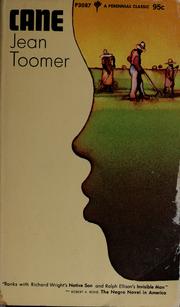
Cane CaneJean Toomer; Harper & Row 1969WorldCatRead OnlineLibraryThingGoogle BooksBookFinder 

The overarching purpose of this project is to put the theories of Barthes, Bauer/Zirker, Iser, Drucker, et al. into practice by collaborating on “editions” of a text, in this case Toomer’s Cane. Obviously, it takes many hands and several years to create a publishable edition of a literary text, so we will keep our expectations modest and emphasize the process of collaboration and the experimentation with the affordances, design choices, and relationship with “implied readers” that digital publication allows.

In class, we decided by consensus to work within the following parameters:

  • two roughly equal groups will each create an edition: each group selected a relatively narrow “frame” for the edition. Whereas a printed “Norton Critical Edition” of a literary text, for example, aims to tell a “general reader” everything they need to know to feel oriented to the text, our editions will focus on a narrower (but more novel) issue:
    • group one (ADD NAMES) will create an edition focusing on popular and “folk” culture represented and reworked in the text.
    • group two (ADD NAMES ) will create an edition that links the text to its “reception history,” embedding quotes and links that give readers a sense of how Cane has been read, focusing on the 1920s and perhaps its revival in the 1970s in conjunction with the “Black Arts Movement” and the rise of African American Studies in the academy.
  • both groups began discussing next steps:
    • choosing a platform (some suggestions are here), creating a division of labor and workflow, and scheduling things out to ensure finishing within two weeks.
    • I want to emphasize that I want you to experiment and enjoy the collaboration: I am realistic about what you can do in two weeks and am perfectly happy with a partial edition that is a “proof of concept.” For example, group two might limit itself to the 1920s reception of the text, or it might add “reception history” only to the “Kabnis” section. Be realistic and follow your interests where they go.
    • Here is a Zotero group I hacked together to collate Cane resources. I’ve already linked to the Modernist Journals Project and a couple of scholarly works linking Cane to music; feel free to add your own. If you’re interested in joining so you can add resources and collaborate with your team on the Zotero group, let me know and I’ll add you.
  • instead of formal presentations like last time, we will have an informal discussion of the process/product on 10/22, though you still might want to designate a spokesperson for your group as one of the “jobs.” I do ask that, as for the first group project, each team member compose a brief post for the blog (500 words max) reflecting on a) the process/product as a whole and b) your specific role within it, with an emphasis on what the experience taught you that theorizing about annotation, marginalia, readers, and editions, or consuming such editions, didn’t.
  • evaluation will be very similar to last time, with a group comment/grade and an individual comment/grade. The criteria are only slightly changed:
    • adventurousness: does the text take risks, or just play it safe? Does the edition resemble other standard “critical editions” in print, or does it do something new, using digital affordances to engage readers in novel ways or devise a new angle on the text that will be fresh to readers?
    • quality: is the product accessible and user-friendly? Does it articulate a clear relationship between the “primary text” and your “secondary” comments on it? Was some attention paid to aesthetics and design?
    • reflectiveness: does the presentation (and the discussion in the seminar and on the blog) reflect careful thinking about the project? Did the secondary readings by Barthes, Bauer/Zirker, Iser, Drucker, et al. inform the project in any way?

Here is the version produced by the Group with No Name (their chosen name). They gave a rather decentralized approach, with each member cultivating their own garden and yielding a wide range of supplementary materials. They used the genius.com platform:

Jean Toomer – Cane: A Critical Introduction

Team: Conn Mac Aogain; Martin Glick, Ostap Kin; Senom; Lola Shehu / This is a digital annotated edition of a selection from Jean Toomer’s Cane (1923). This project was produced as


And here’s the Office Gingers’ version, which used WordPress+hypothes.is and emphasized Cane’s engagement with visual art and popular music:

Annotation of Jean Toomer’s Cane

Bartleby, new and oldish

As you get organized, you might enjoy an early 2000s Bartleby hypertext edition that I’ve rediscovered via the Internet Archive’s invaluable Wayback Machine. It starts with Bartleby’s blank wall and goes from there: cute, no? It exemplifies the kind of Web 1.0 experimentation that Liu analyzes so lovingly in his amazing book, The Laws of Cool.

Here’s a pretty cool version of Bartleby edited by a Slate writer, Andrew Kahn, in 2015. It’s richly illustrated and contains a wide range of notes that provide historical context and a sense of some of the diversity of critical opinions on the text over the years since its publication. And there’s even an audiobook version on the site for good measure.

As such, it also points towards our second collaborative project together, in which we’ll be doing something similar (though with much lower production values!) with Toomer’s Cane (or whatever else we think of), so as you check it out, think about what Kahn did to make this work. Or not.

Finally, although it sometimes seems like ancient history, Bartleby played a starring role in the Occupy Wall Street movement in and around Zuccotti Park in 2012. I’ve collated a few pieces from that time that capture the flavor of the way Bartleby haunted that space and that time:

Rubery online talk next week (9/17)

In a bit of kismet, Matthew Rubery, whose pioneering work on the audiobook and oralizations of novels we will be reading and discussing, is giving an online lecture next week at U of IL. Details below: I’m going to try to catch part of it around my teaching schedule.


The Center for Children’s Books at University of Illinois Urbana Champaign is having an online lecture that will be of interest to those DHers with audio interests. Please see abstract below and attached flyer:

Prof. Matthew Rubery, “Book Audio”
Sept 17, 12-1pm CST

Audiobooks do more than reproduce printed books. Although the audiobook’s reliance on sound is sometimes perceived as a liability, there are numerous instances in which the addition of sound effects might be said to enhance the reading experience. This presentation examines recordings that take advantage of the audiobook’s affordances to go beyond simply replicating print. Drawing on sources ranging from children’s books to celebrity memoirs, it takes up the question: What happens when publishers experiment with sound to create “book audio” instead of audiobooks—that is, recordings whose soundtracks go beyond the verbal description of sounds by using actual sounds?

To sign up, check this URL for the Zoom info on 9/17: https://ccb.ischool.illinois.edu/ss/

ASSIGNMENT: “found” audiobook + presentation

For our next meeting on 9/10, I want you to write a blog post and report on it with a very brief (max 5 min) presentation on any audiobook version of a fiction text that you can get your hands on. Sources might include:

  • free/open texts read by amateurs on librivox.org (which Rubery mentions in his article)
  • texts you download/check out from your local library or the GC’s library
  • texts you buy from iTunes or Google Play or audible.com
  • texts you own or discover at flea markets/secondhand stores

I’d like you to think about and comment on some of the following:

  • production values: how much went into the recording, in terms of vocal training, editing, recording technology, etc.?
  • style: is there a single voice or multiple voices? Does the narrator (or do the narrators) do “voice characterization,” modulating the voice for different characters, or not?
  • fidelity: is the recording abridged or unabridged? Does it stick rigorously to the text or deviate from it?
  • affect: what does it feel like to “read” this text? How does it differ from reading a printed work of fiction?

blog post #1: reading inside/out

Our first session will discuss a few texts that consider, on the most basic level, what reading is. Reading comes so naturally to us that we often fail to examine what it is, how it works, and what kind of mental and material practices it encompasses. Using the readings as a springboard (I hope the Leah Price book arrives on time from reserve!), write a post about some combination of the following:

  • the media that undergird your reading in all their glorious materiality: the small “form factor” and cheap price of the mass-market paperback; the intimate whisper of the Audible narrator in the earbuds; the dynamic and multimodal space of the browser window.
  • the community, implied or literal, that is convened by your reading: the book group, the Goodreads or Facebook “friends,” the Twitter literary dustups, the fandoms around popular texts, even the feeling, however abstract, of the other “implied readers” hailed by the narrator of whatever your reading.

The best posts will drill down into specifics. You might even focus on a single text you’re reading now, challenging yourself to tease out aspects of reading it that are normally invisible because so deeply ingrained in habit.

For a general overview of why I assign blog posts and what makes for a good post, check this out. For this course, my expectations are a bit looser, since it’s an interdisciplinary program and close reading of texts is less central. But the overview gives you some idea of what I’m looking for.

How to Zoom

Most of us probably know the basics at least, but here’s a one-pager that lays out the basics, links to more detailed resources, and gives some dos and don’ts (apologies for the schoolmarmish tone: it was written for sophomores):

Zoom Discussion Guidelines

We will do a lot of our collective thinking and skill-building this term via Zoom, the online video conferencing platform. In order for this to function smoothly as a space for intellectual exchange and growth, we need to follow some basic rules of the road and thus create a safe and dynamic space for ourselves and each other. Here are some guidelines:

how to connect:

For class discussions, we will use the same link  every time: it’s on the syllabus  in our private Dropbox folder. It’s not on the open blog for security reasons. There is a different link for office hours, which is also in those places. Click to connect, and remember to enable video and audio, unless you’ve got some personal reason not to.

how to use:

Remember to enable video and audio: you will be “muted” by default, so to make a comment, you’ll have to unmute to speak up.
Some other ways to participate:

  • raise hand: if you want to speak, use the “raise hand” icon (click on the icon labeled “Participants” at the bottom center of your PC or Mac screen and click “raise hand”). You can also use the “reactions” button to give me or a peer feedback (claps, happy face, etc.)
  • comment via chat: 
    • you can ask questions or add to the discussion in writing via the “chat” function as well. Be careful to address general comments to “everybody” and personal comments to me or to the person you want to address. 
      • I’ll designate a peer to be the “voice of the chat” for each session so I won’t miss important questions or problems as I’m trying to focus on the day’s topic.
    • I will save the ‘everyone” transcript each time, so I’ll have a chance to review unanswered questions or issues after class.

other issues:

Feel free to customize Zoom for self-expression, including:

  • using a virtual background (especially if you have family members or roommates in the environment that might be distracting) 
  • creating an avatar (could be a selfie, could be something else that expresses you); 
  • changing the “name” field to whatever you want to be called (please include a preferred pronoun if you like)

dos and don’ts:

DO 

  • respect one another: we all want to learn, and we all have valuable comments and perspectives to share. 
  • speak up: I recognize that this is a difficult time, but I want you to be active participants in your education at all times
  • ask questions: use the “chat” function when possible to avoid breaking up the flow of discussion and I’ll do my best to make sure things run smoothly
  • reach out to me via email  or office hours or the chat function if you’re having problems or issues, technical, intellectual, or otherwise

DON’T

  • use unprofessional language, engage in personal attacks, or distract others
  • use the chat function (either privately or to everyone) in ways that distract from the topic
  • sit there like a bump on a log: real learning is active learning, when you’re producing rather than just consuming facts and interpretation

For more detail, check out Zoom’s library of video tutorials.

Better intros through grammar

I’ll send out via email as well, but a few things:

  1. I’ve created a little space for introductions using the nifty Padlet platform. Follow my lead and jot down something about yourself using parts of speech to guide us prior to our Thursday meeting.
  2. Please fill out the simple survey I created so I can learn more about you.
  3. If you haven’t, respond to my invitations to the Commons. I sent out new invites today (Tuesday) if you missed the first one.

Welcome

Just a quick welcome to 720 students for the fall. We’ll meet in earnest on Thursday. For now, be sure to check the email I sent and respond to the quick survey so I can add you to the Commons group/site we’ll use to share work and stay organized. Looking forward to meeting you soon!
